
Agriculture Ministry and IFAD Conclude Ten-Day Mission to Advance Agricultural Transformation in Liberia
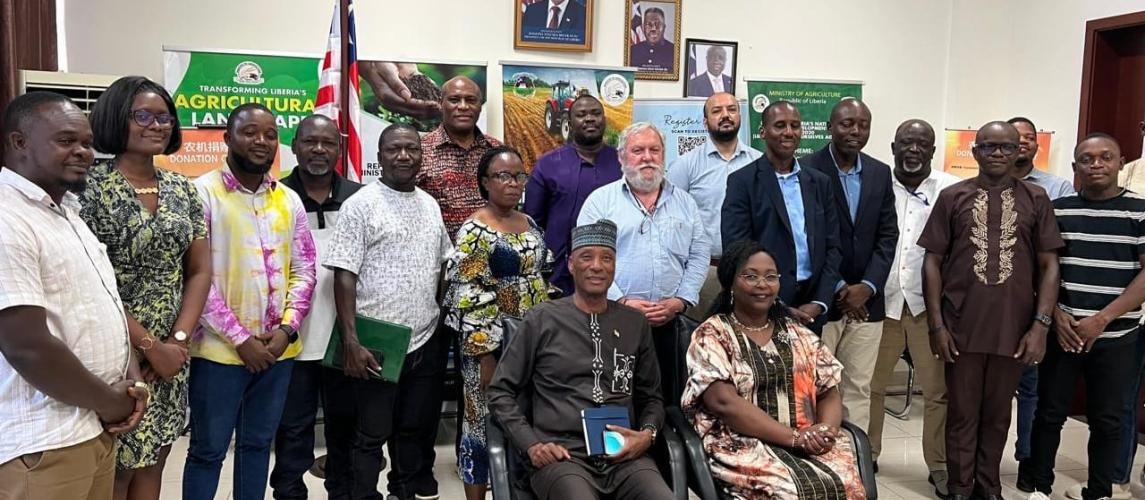
Monrovia, Liberia –April 17, 2026 – The Ministry of Agriculture, in partnership with the International Fund for Agricultural Development (IFAD), has concluded a ten-day Implementation Support Mission (ISM) aimed at accelerating agricultural transformation and improving the livelihoods of smallholder farmers across Liberia.
The mission brought together representatives from the ministries of Finance, Development Planning, and Public Works, technical specialists, and a five-member international delegation led by Doolan David William. It assessed progress, identified implementation challenges, and strengthened delivery of key programs under the Smallholder Agricultural Transformation and Agribusiness Revitalization Project (STAR-P) and the Investing in Livelihood Resilience and Soil Health in ACP Countries (ILSA) Project.
Joint teams conducted field visits to Nimba, Margibi, Grand Bassa, Bong, Grand Gedeh, and River Gee counties, engaging farmers, farmer-based organizations (FBOs), cooperatives, and local stakeholders. These engagements provided firsthand insights into ongoing interventions and highlighted opportunities to boost productivity, expand market access, and strengthen resilience.
The mission recorded progress in key areas, including expanded farmer training, increased development of inland valley swamps, and improved yields in rice, oil palm, and vegetables. Stronger farmer organizations have also enhanced coordination, knowledge sharing, and market participation.
However, persistent challenges remain, including poor road infrastructure, high energy costs affecting agro-processing, and limited irrigation for year-round production. Strengthening monitoring and evaluation systems and institutional capacity was also identified as critical to improving performance.
The mission recommended a shift from input-driven interventions to a results-oriented approach focused on profitability, including simple tools such as gross margin analysis to better track farmers’ returns.
It also emphasized strengthening FBOs and cooperatives, promoting sustainable land and soil management, and advancing climate-resilient agriculture through the ILSA initiative.
Speaking at the close, IFAD Country Director Pascaline Barankeba described the initiative as a major opportunity to transform agriculture and rural livelihoods.
“This project is a real opportunity to transform agriculture in Liberia, but we must think bigger—empower farmer organizations, invest in innovation, and expand access to tools, finance, and markets.”
She stressed the importance of youth inclusion:
“We must make agriculture attractive to young people by promoting innovation, technology, and entrepreneurship, and positioning it as a modern, profitable career.”
On market access, she highlighted the need for stronger institutional partnerships:
“We need MOUs between cooperatives and WFP to secure reliable markets, boosting production while supporting school feeding and rural livelihoods.”
Agriculture Minister Dr. J. Alexander Nuetah, speaking virtually from the United States, welcomed the approach and reaffirmed the Government’s commitment to strengthening structured markets for farmers.
“Creating reliable market systems is critical to transforming agriculture into a business,” the Minister said. “We will continue to work with partners to link our farmers and cooperatives to institutional buyers, ensuring that increased production translates into real income and sustainable growth for rural communities.”
He further reaffirmed the Government’s commitment to scaling up mechanization and investing in critical infrastructure, particularly irrigation.
“Liberia cannot achieve food security without mechanizing its agriculture,” he stated. “Expanding irrigation infrastructure will enable year-round production and allow us to move from smallholder plots to large-scale, cooperative-driven farming.”
On financing, the Minister called for more sustainable approaches:
“We must rethink matching grants. Instead of ‘free money,’ we should promote revolving funds that strengthen accountability, ownership, and long-term impact.”-
The mission further underscored the need to strengthen farmer institutions, expand access to finance, promote research and innovation, and improve targeting through data-driven approaches such as GIS mapping. It also highlighted the importance of reducing post-harvest losses through improved storage and cold chain systems, alongside the adoption of smart irrigation technologies.
Overall, the mission reaffirmed a shared vision to build a resilient, inclusive, and commercially viable agricultural sector in Liberia, one that empowers farmers, reduces import dependency, and contributes to national economic growth.
